TALK WITH THE HANDS
Dr. Elizabeth M. Wakefield recently visited our Neuroscience Seminar and hosted a discussion on gestures, focusing particularly on what makes movements become gestures. I had never thought of it that way because I assumed all hand movements were called gestures, but there are actually three different ways that hand movements can be interpreted. Movement can be a means to an external goal, a goal unto itself, and a movement used to represent other types of action. The latter is what we call "gestures".
Novack, Wakefield, and Goldin-Meadow noted two experiments done by Schachner and Carey. In the first experiment, "participants were asked to interpret a video in which a character either moved objects from one location to another (Object Present condition) or made the same movements without the objects present (Object Absent condition)” (Novack et al, 2015). What had happened was that when the participants were asked to describe movements done with the objects present, they would conclude the movements were utilized due to the external goal of sorting the colored balls. Without the objects present the participants would deduce that the movement was merely movement-based, such as just moving the arms left and right. The second experiment had a similar set up, but it also showed that participants were more likely to deem movements as movement-based if the movements that the actor was doing were inefficient. The efficient movement would be moving towards the target and whereas the inefficient movement would be moving towards the target and then moving away from it. Why was this discovery important? Well, it challenged the long held belief that humans would only interpret actions in terms of external goals; under certain conditions actions could be completed as a goal unto themselves.
 Novack et al. took this one step further by introducing gestures. Apparently, there had been little to no research done on how participants would label a movement that was done as a representation of a movement. They conducted two studies, one in which they established that "empty-handed movements could be seen as representational, but also as a movement for the sake of movement” (Novack et al, 2015). They established this conclusion after having three conditions, (1) Action on the objects, the object is directly manipulated by the actor, (2), Actions with Objects Absent, and (3) Actions off Objects with Objects Present, where the actor performed the movements over the objects and did not directly manipulate them.
 The second study explored how certain contextual cues could make empty hand movements appear more meaningful than they are. What they did was have three dimensions to this study. (1) Handshape; whether the handshape was grasping or tracing, (2) Object presence; whether or not the movements were done near/on any objects or without any objects at all, and (3) Speech; whether or not the actor vocalized their movements. After obtaining their results, they come up with three conclusions: (1) movements are more likely to be considered representation of acts if in the presence of relevant objects,( 2) movements are more likely to be considered representational if the handshape is similar to the handshape one would make in the movement it was representing (such as a throwing movement if representing a throw), and (3) difficult to interpret handshape would be deemed representational if accompanied with the audio of what the actor was doing. (Novack et al, 2015).
The findings of these two studies help us now understand that empty-handed actions do not only have to be interpreted as action-oriented, can but also be movement oriented, and even representational. Now, it may seem like a trivial study, but it is not when you consider just how much we humans employ gestures into our every day lives. Gestures are incredibly influential in facilitating communication, learning, and cognition. The Huffington Post picked up on the importance of gestures and published an article entitled "The Fascinating Science Behind" Talking" With Your Hands" that highlights different ways gestures are useful on a daily basis.
As the Huffington Post article notes, our hand gestures not only help play a role in the way we think, but also in the way we understand others. Evidently, the Broca's area activates when we wave our hands. For those of you who do not know what the Broca's area does, it is a region in the brain that is connected to speech production. (Gregoire, 2016). Thus proving that there is indeed a neurological link between gesturing and speech. That is why Dr. Kinsey Goman, a body language expert, stated that, "Gesturing can help people form clearer thoughts, speak in tighter sentences and use more declarative language.” In terms of understanding others, the article notes that gesturing with hands helps emphasize the important points that someone is making to you. We process the information subconsciously, but sometimes we can consciously, or at least instinctively, feel a person's energy through their gestures because they become more lively as the person becomes more excited about what they are talking about (Gregoire, 2016).
Interestingly enough, gestures can almost act as a second language. Think of it this way, you are trying to explain some fascinating neuroscience finding to a friend who has no knowledge about the neuroscience field. By using gestures, your hands reveal information that you vocally may not be revealing, such as signaling important pieces of information (Gregoire, 2016). This is particularly important in childhood development because it can help build a strong vocabulary. The article mentions a study that was published in the Journal of Child Language, and what they did in this study was ask 6-year olds to relay what was happening in the cartoon. They did this again when the children were 7, and when they were 8. What they found was that the "children's ability to structure a narrative improved over this time period--and children who had expressed a character's viewpoint using hand gestures at age 5 were more likely to tell better structured stories later in life." (Gregoire, 2016). Typically, hand movements and speech work together to illustrate an idea, but this is not always the case. According to Dr. Susan Goldin-Meadow, a University of Chicago psychologist, "Children who produce gesture-speech mismatches on a task may have information relevant to solving the task literally at their fingertips and could, as a result, be on the cusp of learning how to solve that task."
While it may be a sign of learning in children, gesture-mismatch in adults is often viewed in a negative light. Dr. Kinsey Goman suggests that, "People are less likely to trust adults whose motions and words don't seem to match". It is understandable that people would feel distrustful of a person who's gestures and speech doesn’t align because it can reveal discrepancies between what is verbally said and what is subconsciously said (Gregoire, 2016). Imagine a person who is trying to prove to you that they were late to work because of a family emergency, but you happened to noticed that he was touching his nose after every few seconds. When you must invent a lie on the spot, you tend to spend more time gesturing and fidgeting by doing stuff like touching your nose, scratching yourself, or even playing with a pencil in your hand. However, when your gestures do match up, it can lead to positive associations. For example, did you know that the most popular TED talks use an average of 465 gestures? According the Gregoire, that is nearly "twice as many as the least popular speakers use." Apparently, the use of gestures emits a warm and agreeable aura, whereas lack of gestures emits an aura of coldness and analytical thinking. So don't ever feel self-conscious about your flailing arm movements or elaborate gestures—they are a good thing! (Just don't hit anyone next to you!)
 To summarize the Huffington Post article, gesturing is extremely important in not just playing a role in how you think, but also in explaining and emphasizing ideas to others. It has been proven that using gesturing in childhood not only builds upon the child's vocabulary, but also helps the child express viewpoints. Reasons such as those are why it is important to recognize that motions do not have to simply be for the sake of goal achievement, but that they can also be for the sake of just movement, or for the sake of representation. The more we can understand about gestures, the better we can understand communication—how people can be swayed, how people use gestures to build a persona, how to incorporate gestures in the workspace to better communicate with coworkers, and perhaps how we can use gestures to better group and family therapies. There is so much we can do once we better understand how gestures can act as a window to someone’s mind.
References
Gregoire, C. (2016, February 04). The Fascinating Science Behind 'Talking' With Your Hands ... Retrieved October 19, 2016, from http://www.huffingtonpost.com/entry/talking-with-hands-gestures_us_56afcfaae4b0b8d7c230414e
Novack, M. A., Wakefield, E. M., & Goldin-Meadow, S. (2015). What makes a movement a gesture? Cognition, 146, 339-348. doi:10.1016/j.cognition.2015.10.014
Images
Deepwarren. Women talking. (2007). [Photo]. Retrieved from https://www.flickr.com/photos/fuzzhead/2089164263/in/photostream/
Novack. (2015). [Photo] Retrieved from What makes a movement a gesture? Cognition, 146, 339-348. doi:10.1016/j.cognition.2015.10.014
PEOPLEIMAGES.COM VIA GETTY IMAGES. [Photo]. Retrieved from http://www.huffingtonpost.com/entry/talking-with-hands-gestures_us_56afcfaae4b0b8d7c230414e?ir=Science§ion=us_science&utm_hp_ref=science

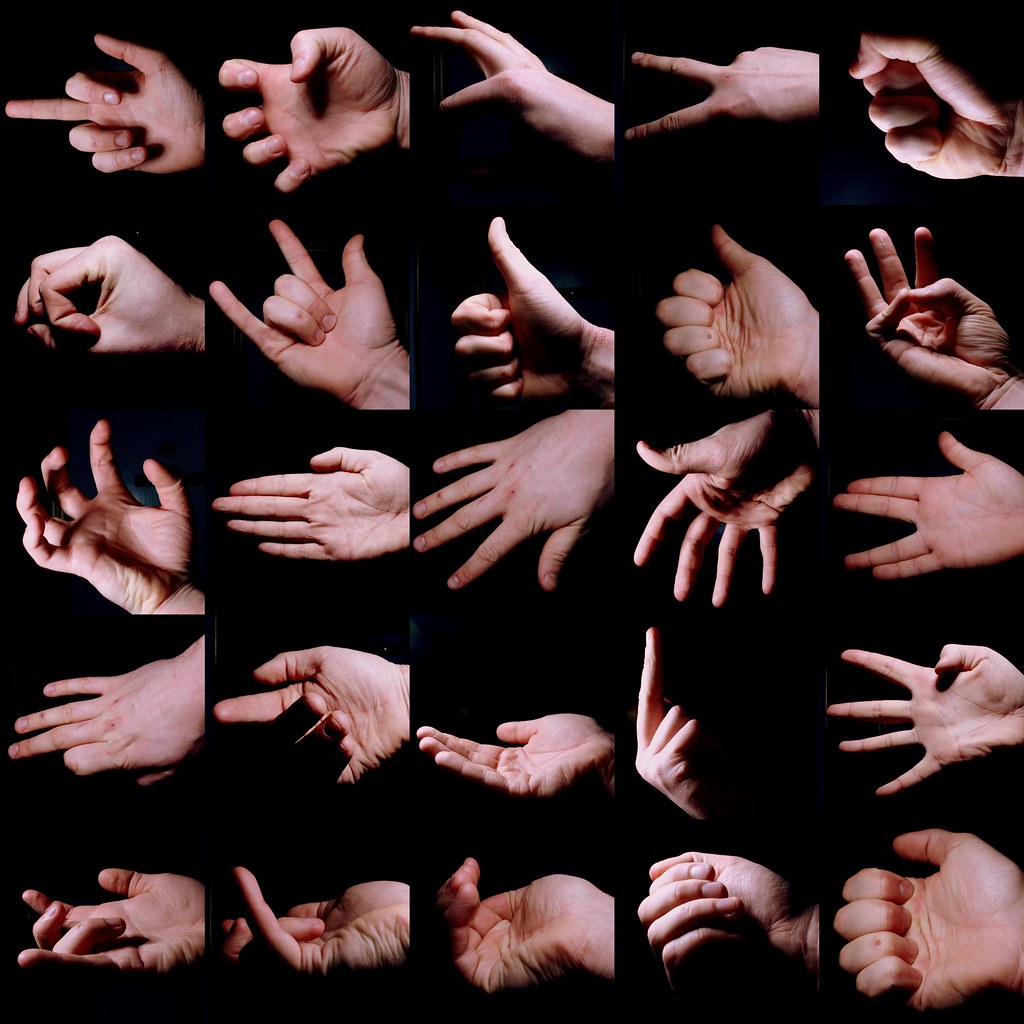

 Gestures not only can help children learn, but also depending on the context, they can also help in other ways such as helping autistic children develop better social skills. A new study was designed in group therapy that focused on autistic children and their use of Shakespeare. “Shakespeare’s rhythmic language with physical gesture” (Nauert) plays were recited by a group of children with ASD. At the end of the study with the children ASD showed improvement in language skills and emotional-facial recognition.