Wednesday, May 1, 2019

Sex Differences Associated with Stress Elevated in Females
By Maria Younan
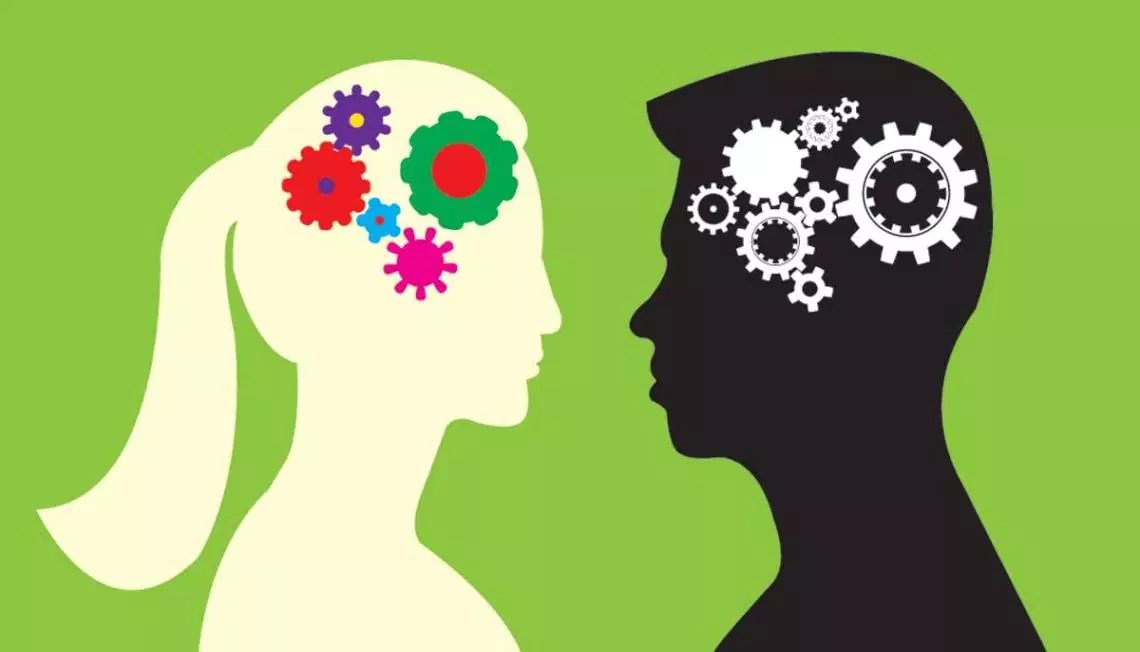

Recent stress studies have looked into the differences between females and males, both biologically and behaviorally. Dr. Monsheel Sodhi gave a talk where she spoke about the interactions between the glutamate receptor gene expression in depression and suicide, and the associated sex differences. Previous research shows that the glutamate system is distorted in patients with major depressive disorder (MDD). Dr. Sodhi’s  research has found that female subjects with MDD have elevated glutamate receptor gene expression, whereas in male subjects with MDD expression was lower, in comparison to controls. Furthermore, female MDD suicides revealed higher expression of glutamate, which reveals interesting potentiality in anticipating suicide. Ultimately, her work emphasizes the need to dig into biological sex differences, and to investigate and include more females in studies.

Recently, a study conducted at the University of Pittsburgh explored the association between alcohol abuse and stress using rats. Mary Torregrossa’s team measured risk factors which lead to alcohol abuse in the rats. The rats were trained to press a lever which gave them alcohol, which was paired with an audiovisual cue, for three weeks. Next, the rats were given yohimbine, a drug which produces a stress response in humans and rats. Researchers found that, similarly to Dr. Sodhi’s work, the females pressed the lever more than the male rats, following a cue or stress exposure. When given a combination of the cue and stress exposure, females still had higher alcohol seeking behaviors than the males.

The results of this study could have potentially large implications for people as related to Dr. Sodhi’s talk. The talk and study indicate the females being more impacted than males, either behaviorally or biologically. This study shows that the females influenced by stress were driven to seek and consume alcohol. The talk depicts that females have higher gene expression in glutamate pathways when associated with MDD/suicide.

Even though the study is implicated in mice, the findings of the study also highlight a basis for looking into the differences between sex and brain pathways. There is a trend of females having elevated impacts, either biologically as seen in Dr. Sodhi’s work, or behaviorally as seen in the study done at the University of Pittsburgh. Hopefully, increased efforts by researchers will explore various sex differences and the impact on female subjects to increase the knowledge and direct further treatments.

Neurobiological Workings of Cocaine Addiction


            The increasing use of drugs and manifestation of drug addiction continues to increase in the United States. Specifically, cocaine use has grown. Its ability to elevate mood and emotions and creating a feeling of power, attracts individuals. Yet, its broad effects on the brain stemming from dopamine elevation, memory impairment and decrease in decision making, sets a foundation for a highly addictive drug that deteriorates the neurobiological system. The use of cocaine on the brain, specifically the GLP-1 receptor, is explored by Mitchell Roitman in his lecture as well as in his study, Central GLP-1 Receptor Activation Modulates Cocaine-Evoked Phasic Dopamine Signaling in the Nucleus Accumbens Core. The GLP-1 receptor is seen to produce a dopamine packed signal in response to cocaine use. further able to come to the conclusion that by inhibiting a section of the GLP-1R, there would be a limited dopamine response to cocaine, therefore potentially helping someone overcome the addiction. Roitman’s study of GLP-1 and the potential effects it could have on cocaine addiction, opens a doorway to unique manners to treat cocaine addiction though neurological developments.

            By being able to observe someone’s dopamine release level, they could also determine their biological addiction to cocaine. In a study by Eric Nestler called The Neurobiology of Cocaine Addiction, he observes cocaine’s direct effects on the brain and how it is able to develop an addictive response. It is important to understand the full biological pathway of cocaine to not only determine how it works, but also how to treat it. Nestler observes that cocaine provides a response in the brain’s limbic system. The limbic system is directly correlated towards emotions and mood. He observes similarly to Roitman’s study, that cocaine use results in a spike of dopamine levels, which is the main catalyst for providing the addiction. Simultaneously, it is observed that in the limbic region, the frontal cortex is important for the decision making. Therefore, when cocaine use is administered over a long period of time, the limbic region and the frontal cortex begin to deteriorate, causing a decrease in decision making. This allows the subject to be more likely to become addicted with the deterioration of the frontal cortex because they are potentially more likely to continuing to seek cocaine use. Another region in the limbic system is observed for Nestler, observing the region that focuses on memory. He comes to the conclusion that during a period of cocaine use, this experience is elevated and recorded in the memory as intense and different. This creates a dynamic where one has a distinct memory of that intense experience. All of these separate elements of cocaine and its effect on the brain, attribute to the addiction a nor enforcement of the drug.

            Before having observed Roitman’s lecture as well as reading Nestler’s study, the effects of long-term cocaine use were apparent. I had never studied the exact details and mechanisms of what happens during cocaine use. Through both of these studies, hypotheses can be generated regarding how to treat the addictive properties. Just like majority of addictions, the subject won’t be addicted after one use. But, with increased and consistent use of cocaine, will provide reinforcement in which the body becomes accustomed to the use and expects it. Therefore, cocaine producing a response in both dopamine increase as well as effects on mood through the limbic system, compromises the neurobiological system by providing an external factor that supplements an elevated feeling and emotion. It is important to observe the effects cocaine has on the brain, in order to determine the best manner to diminish its dopamine release as well as detrimental effects to the limbic system.


Works Cited

Nestler, Eric J. “The neurobiology of cocaine addiction.” Science & practice perspectives vol. 3,1 (2005): 4-10.

Fortin, Samantha M., and Mitchell F. Roitman. “Central GLP-1 Receptor Activation Modulates Cocaine-Evoked Phasic Dopamine Signaling in the Nucleus Accumbens Core.” Physiology & Behavior, vol. 176, 2017, pp. 17–25., doi:10.1016/j.physbeh.2017.03.019.


Contraceptives with estrogen may increase the risk for depression and suicide in females

Some of the important findings from the work by Monsheel Sodhi et al. include concerns and research on the relationship between glutamate and suicide/psychological disorders. Compared to males, it was found that females have higher GluR (glutamate receptor) expression in suicides and an elevation in Glu transporters (in depressed women). Additionally, their research has implications that severe depression may be due to glutamate spillover.
The sex hormones and glutamate interaction subtopic in the article by Claudia Barth, Arno Villringer, and Julia Sacher emphasizes the importance of the integration of glutamatergic transmission for normal cognitive functioning and mental health. Through research with rodents, it was found that progesterone suppresses excitatory glutamate response in a dose-dependent fashion, while “estrogen exhibits facilitating effects on glutamate transmission” (Barth et al., 2015). Progesterone was found to have an impact on non-NMDA receptors the most, while estrogen effects cognition via NMDA glutamate receptors. Specifically, “estrogen has been shown to promote an increase in NMDA receptor subunit expression, binding sites, and neuronal sensitivity to synaptic input mediated by NMDA glutamate receptors” (Barth et al., 2015). The interaction between glutamate and estrogen impacts cognition (i.e. executive function and working memory), specifically under “harmful conditions” like stress. It was found that normal estrogen levels and signaling is necessary for the prefrontal cortex and hippocampus (the brain regions involved) to counter the impacts of harmful conditions.
According to Dr. Kate Placzek in “How Pill Contraceptives Affect Mood & Behavior,” estrogen and progesterone not only play a neuromodulatory role for complex biological processes, but they also play a “critical role in regulating cognition, learning, memory, emotion, mood, and motor control” (Placzek, 2016). This modulation can be a result of estrogen and progesterone directly acting on their receptors, or by interacting with dominant neurotransmitter systems (for this, we are mostly concerned with glutamate).
Now you might ask, why does all this matter? Although the underlying mechanism (the causation) has not been directly evaluated in these collection of studies, it is a possible concern that women who use some form of contraceptive medication or technology involving estrogen are at an increased risk for depression and suicide.
If we compile these various sources, then we should be able to make two statements, in which we will focus on estrogen and females: 1) If there is an increase in estrogen (due to some form of contraceptive), there is a promoted expression of a glutamate receptor called NMDA receptor (NMDAR). 2) There is an increase in glutamate receptor expression that was found in suicides (Sodhi et al., 2015). Therefore, a future direction for these studies would be to determine whether an increase in estrogen from certain contraceptives may result in an increased risk for depression and suicide.

Sources:
Barth, C., Villringer, A., & Sacher, J. (2015). Sex hormones affect neurotransmitters and shape the adult female brain during hormonal transition periods. Frontiers in neuroscience, 9, 37. doi:10.3389/fnins.2015.00037

Sleep Debts: Paying them off

Have you ever experienced a busy work week at least once in your life? I think most of us
can relate to this and most likely on a much deeper level. Is that morning, afternoon and
evening coffee really the only thing that is affecting us? Sleep debt, which is widely known
as sleep deficit, is defined as the cumulative effect of a person not having adequate sleep.
Studies such as Dr.Cavanaugh’s on chronic circadian misalignment resulting in reduced
longevity give us insight into what may actually be going on in terms of neurological changes
in the brain. This lack of sleep may be impacting our health in a way that we may have not
realized before. 
Even before seeing the results of Dr. Cavanaugh’s experiments, one can deduce that people need sleep and without it, there may be negative health consequences. To elucidate this some more, Dr. Cavanaugh conducted chronic circadian misalignment studies on flies(Drosophila). In the process of doing this, he put the flies into an activity manager tube where they could record sleep and activity by the fly passing through a laser beam. Then they exposed certain flies to light and dark shifts where they were able to misalign the sleep patterns of the flies. The results were stunning in the sense that the flies which experienced sleep deficits were dying about 15% earlier than those without circadian misalignment. Furthermore, to see what was happening on a genetic molecular level, they ran full-body RNA sequencing in order to see what genes were changed in the flies with the chronic circadian misalignment. The results were fascinating. Through their findings, they were able to show that the genes for oxidative stress as well as other factors that result in premature aging were upregulated. This may be the start of understanding the implicit factors that sleep debt has on our lifespan. 
A paper published by Harvard Medical School, explains to us why sleep is important and why we can’t live without it. Some tips that the paper mentions include avoiding caffeine in the afternoon, not taking naps during the day even if a shift worker because that can further misalign your sleep. One study that they conducted showed how students who only slept four hours a night for six nights had their immune system compromised, developed higher blood pressure and increased cortisol which is a stress hormone. After the study, the participants were required to take cognitive tests and the results showed that their response time decreased as well as their performance scores. 
Overall, these findings work together to show us how sleep deprivation may be decreasing our lifespan. On the range of a fly’s lifespan, 15% can be a few days while on a human lifespan that can equate to a few years. While our society moves further into the future we need to be conscious of the health impact on our shift workers who work all night in artificial lighting conditions. We need to take into account the genetic and cognitive outcomes that may result from prolonged sleep deficits. Assuming most people do not get enough REM sleep in their night, one may recommend tactics that were mentioned from the Harvard Medical School post in order to increase our sleeping hours and maybe even our lifespan. 

Cavanaugh, D. (2019, January 7). Chronic circadian misalignment results in reduced longevity and large-scale changes in gene expression in Drosophila. Retrieved from https://bmcgenomics.biomedcentral.com/articles/10.1186/s12864-018-5401-7
Harvard Health Publishing. (2018, June 18). Repaying your sleep debt. Retrieved from https://www.health.harvard.edu/womens-health/repaying-your-sleep-debt

Brain Dead or Brain Revival? 
         
            Brain death has always been a confusing phenomenon that many health professionals and family members have tried to understand. In the article, Brain Death: What Health Professionals Should Know by Tina Powell, she addresses how health care professionals do not have a “clear definition and assessment” when talking about this phenomenon. In 2010, the American Academy of Neurology (ANN) created three signs that physicians could use to declare a patient brain dead. These signs stated the person must be in a permanent coma and the physicians must know the cause of the coma. Along with that, the reflexes of the brain stem can no longer be working and finally, the patient can no longer breathe on their own. With these guidelines, one would believe that healthcare professionals would be able to address brain death in a clearer fashion, but with more research coming out, the ethical guidelines are about to become more complicated.

            An article in National Geographic by Michael Greshko addresses a new study published in April of this year; showing that scientists have discovered a way to restore the functions in a dead brain. In the journal Nature, scientists at Yale University have invented a dialysis machine called BrainEx. In this study, researchers took brains from already decreased pigs and placed them in this dialysis machine. BrainEx was able to restore functions in the brain such as its ability to take in glucose and oxygen (up to six hours). This allowed the brain to establish circulation. BrainEx creates a nourishing solution that allows dead brains to mimic the body’s natural circulation while restoring the tiniest blood vessels. One of the neuroscientists, Nenah Sestan states that “clinically, it’s not a living brain”, but the machine was able to bring back functions that a living brain requires. With a machine such as BrainEx, Nita Farahany, a bioethicist at Duke University School of Law states that this discovery, “challenges a lot of fundamental assumptions that we had in neuroscience, like that once there is a loss of oxygen to the brain, it’s irreversible march towards death.”


(Preserved Pig Brain; National Geographic)


With BrainEx proving that to false, we return to the conversation that Joe Vukov, an Assistant Professor in the Philosophy Department brought to seminar. What are ethical implications of brain death and how do we address it to family members that could one day benefit from the research neuroscience offers? To that, Nita Farahany says, “profound ethical and legal issues are raised.” It all goes back to how we define brain death, which is still a question being remodeled and being answered by ANN’s three checklist. This new technology may establish a new conversation other than the three checklist among healthcare providers. As of right now however, BrainEx's ability to restore cellular functioning does not mean scientists are ready to bring brain dead humans back to consciousness. Farahany states that while the pigs didn’t consciously come back and it’s too early to know if that’s a possibility, scientists are closer to having that outcome become reality. Technology such as BrainEx could change how healthcare providers talk about brain death to their patients, because it can create a route to revival. In seminar, Professor Vukov discussed how there needs to be a change in communication between family members that have loved ones who are labeled brain dead by healthcare providers. If studies such as BrainEx continue to be successful in trials and one day are given clearance to be used on humans, at least healthcare providers can have one outlet to offer family members that want to bring their loved ones back. 
                               

Information about Yale Study and Ethical Implications provided by:
Greshko, Michael. “Pig Brains Partially Revived Hours after Death-What It Means for People.” National Geographic, 17 Apr. 2019, www.nationalgeographic.com/science/2019/04/pig-brains-partially-revived-what-it-means-for-medicine-death-ethics/.
American Academy of Nueorology Background provided by:
https://www.aan.com/Guidelines/Home/GetGuidelineContent

Dead or Alive?


Dead or Alive?

An individual is laying in a hospital bed, aided by a ventilator. Their heart is beating but their eyes stay closed, reacting to no stimuli. The ultimate question becomes: Is this individual still alive or dead? This stems into the concept of brain death, which can be defined as total cessation of all brain function.
Often times brain death is misunderstood to be a coma or vegetative state, however these are different and can be described as “complete unawareness of the self and the environment, accompanied by sleep-wake cycles, with either complete or partial preservation of hypothalamic and brainstem autonomic functions.” Joseph Vukov research focuses on individuals who are in a minimally conscious state, which is characterized by some response to the environment, even if the slightest. Brain death can be compared with locked in syndrome where patients have awareness but lack the ability to move. Although these patients may appear to be similar to brain death patients it is essential to note that locked in syndrome can be diagnosed with an EEG or fMRI.  Dr Vukov elaborates how brain dead patients may seem as if they are breathing and alive because they are hooked to a ventilator, however this is all tricks of the trade of medical equipment. A case study that illustrates this is a women by the name of Jahi McMath was brain dead and had went through puberty while being attached to medical machinery. This incident posed conflicting views because her caregivers presumed that she was still alive, when she was pronounced dead.
Thus among the many disorders of consciousness, brain death is the most complex in terms of declaring the end of an individual's life. Dr Vukov taps into this ongoing debate discussing the legalities associated with it and emphasizing the implications of brain death. The requirements affiliated with a decision of pulling the plug is for the individual to exhibit complete absence of brainstem function and spontaneous respiration.
It is essential to understand the differences between brain death and other disorders of consciousness from the perspective of a physician as well as a patients family or loved ones. According to the article, “Brain Death: What Health Professionals Should Know” the first step in clarifying misconceptions is understanding the content of the subject and then rightly guiding the public on what it entails. This can be done by physicians and accompanying staff to receive the proper training that clarifies brain death concepts and how to go about communicating it.
With the age of technological advancements, according to the article, “Reversing brain death: Far-fetched or feasible?” researcher Ira Pastor is on the mission to test a variety of techniques in terms of neuroregenerative properties and restoration of neuronal functioning in humans in hopes of restoring life to the clinically dead. Although this research may pose ethical concerns and seems unrealistic but there will be be four clinical techniques that will be employed. “Pastor and team plan to use in their trial have shown promise for improving brain functioning. Research indicates that stem cell therapy and transcranial laser therapy may help to repair brain damage"
Overall, Ira Pastor propels the idea of reversing the irreversible in hopes of exploring the deeper issues of the human mind and marking the foundations of brain death. Leading into Dr. Vukov and Dr. Powell who highlight the concept of brain death and how it can be tackled in the world of medicine. Many of the case studies that are presented are integrated between the two articles, to exemplify how brain death has become an ongoing and misunderstood issue. Distinctions are still continued to be made in terms of identifying consciousness and brain death and many researches still can not distinguish between brain death and death .

Works Cited:
Powell, T. (2014, May 01). Brain Death: What Health Professionals Should Know. Retrieved from http://ajcc.aacnjournals.org/content/23/3/263.short


Daylight Savings Time: That Extra Hour isn't Helping Anyone

Circadian rhythms operate in living organisms to give structure to their daily activities as well as to neurologically prepare them for whatever the body needs to be more apt at that point in the day. Many functions and biosynthetic pathways of the body rely on these clocks to be optimized for their respective tasks. For instance, the body produces higher levels of melatonin as it anticipates the sun setting and prepares itself for sleep. Human beings, however, are one of the few species capable of entirely and intentionally disrupting these circadian rhythms in favor of non-cyclic behaviors.
Sam Baker of Kera News writes about one of these atypical behaviors in “How That Extra Hour In Daylight Saving Time Can Disrupt Our Body Clocks and Our Health”. He discusses a bill in Texas state legislature that would exempt the state from shifting its clocks for daylight savings time. The idea originated back in the days of the post-american revolution in the mind of founding father, Benjamin Franklin as a means to most productively utilize daylight hours available. Since then however most of the United States has transitioned away from an Agrarian economy and doesn’t benefit from the artificial structure. Baker interviewed Dr. Joseph Takahashi who had said that all people would benefit from living in standardized time. The Spring DST pushes us forward the extra hour away from standard time and ends up, according to Takahashi, being far more destructive to our normal sleep and circadian rhythms. People tend to wake up a few minutes later each day resulting in days that are over 24 hours long. Enforcing the hour shift away from standard time reduces our alignment with the natural cycle of the night and day to the point where there are often more accidents and drops in productivity associated with the proceeding weeks.
Another point the article brings up is that of the increased risk of cancers associated with different time zones during DST. The West coasts of all countries that employ DST in a continuous manner have higher rates of cancer than that of the Eastern sides when considering the appropriate factors. Despite the fact that daylight savings time is a construct created centuries ago, it has had profound effects on human health. This is an excellent point to compare to a lecture done by Dr. Daniel Cavanaugh on sleep and circadian rhythms. According to his research on Drosophila, chronic circadian misalignment leads to decreased lifespan due to accumulations of various mutations. Specifically, the flies he worked with were subjected to CCM conditions which increased the day-span of the flies to 28 hours. This constant condition lead to the decrease in lipid metabolism in affected individuals which then caused the aforementioned accumulation of age-related defects.
While his research has yet to have been concluded (his lab intends to follow up on the relationship between the lipid metabolism and subsequent issues) it does relate heavily to the problems with shifts in circadian clocks brought up in Baker’s article. The decreases in lifespan as well as the correlated effects on health are brought up as concerns for both authors. Dr. Cavanaugh’s research serves as preliminary analysis of the reason behind many of the deficiencies in those with shifting circadian rhythms. However, the Kera article does focus more a smaller shift in term- 1 hour for DST versus 4 hours for CCM as well as the fact that the 1 hour shift remains consistent while the 4 hours for CCM is constantly progressing (8AM becomes 12PM becomes 4PM, etc.). These differences make it so that the research done at Loyola isn’t necessarily a direct comparison for the effects caused by daylight savings times shifts forward or back.
Overall, daylight savings time being an artificial concept that structures our days in a manner not conducive toward regular circadian clocks undeniably makes it a contentious topic. It disrupts our biosynthetic pathways cycles and ultimately prevents us from having a “normal” day. Feeling out of it when either shift for DST isn’t unusual as it causes a shift from the patterns we spent the last six months growing accustomed to. These have adverse effects on our health, as pointed out by Dr. Takahashi and Dr. Cavanaugh’s research. The bill has still yet to pass through Texas’ legislature, though expect to see similar resolutions emerge as the benefits of such a change are further explored.

Baker, Sam. “How That Extra Hour In Daylight Saving Time Can Disrupt Our Body Clocks and Our Health.” KERA News, NPR, 15 Apr. 2019, www.keranews.org/post/how-extra-hour-daylight-saving-time-can-disrupt-our-body-clocks-and-our-health