Tuesday, February 28, 2017

Can We Ever Cath Up?

Sleep is vital to every type of life on earth, especially college students. As college students, we scream with joy at the thought of a full night's rest because on average we get about six to seven hours of sleep a night. The average adult requires about seven to nine hours of sleep. Due to the stressful nature of college life, students are getting much less sleep than they need. Considering the amount of concentration and intelligence required during college is it healthy to be losing out on this much sleep?


During the question and answer portion of Dr. Cavanaugh’s talk about his sleep research with Drosophila and the circadian clock gates, the topic of sleep debt was brought up. Dr. Cavanaugh stated that if we are losing sleep during the week, then we are able to make up for the lost hours of sleep by catching up over the weekend by sleeping in for a few hours. However, if we do not catch up on our sleep over a long period of time our neurons begin to degenerate. Dr. Cavanaugh spoke of a study done that tested the attention/concentration level of a subject that received six hours of sleep for a week. The test required the subject to stare at a grey fuzzy screen and press a button when a dot appeared on the screen. This task seems fairly simple, if not boring, however the subject who received six hours of sleep during the week did poorly on this test. Dr. Cavanaugh said that the subject would keep nodding off and was not able to perform the task. The subject performed at the same cognitive level as a subject that was kept up for a day and a half.

This thought shocked me because over the past four years I have been getting about six hours of sleep if not less almost every night. Over time this has affected my health, and there is no doubt. I have noticed I have very low energy, my eating habits are unhealthy, and my concentration ability has severely decreased. I began to think I should be able to catch up on my missing hours of sleep over the weekend, but then I did the calculations and realized it was almost impossible for anyone to catch up on their sleep.
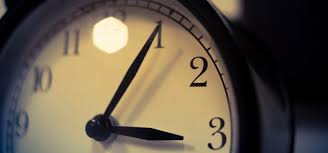


If I was able to get six hours of sleep a night and the average amount of sleep an adult should get every night is eight hours, then that would mean I am missing two hours of sleep every night. Over five weekdays that amounts to sleeping an extra ten hours over the weekend. In theory that does not sound like much sleep, but then you add in the normal eight hours of sleep during the weekend and that amounts to a total of twenty six hours of sleep. Realistically, it is not possible to get ten hours of extra sleep over the weekend for a number of reasons, such as weekend plans, going to church early Sunday morning, and staying up late on Saturday night. So, in reality is it possible to catch up on sleep?


Thinking outside of my personal lack of sleep, almost every college experiences this lack of sleep. This must have an effect on us once we move on from college, such as a decreased ability to concentrate on one task, insomnia, and several others. What about the college lifestyle is making students stay up into the late hours partying or doing homework? Do we understand the repercussions of pulling all nighters for an exam?


Over time college students are losing more and more sleep and are not able to repay their sleep debt. Several studies have shown that there are many serious health problems associated with long term sleep deprivation. Future studies might investigate the specific effects college students lack of sleep have on their health in the future. These studies might lead to students taking care of their health and sticking to a healthy sleep schedule. 


References:


Cavanaugh, Daniel J., Abigail S. Vigderman, Terry Dean, David S. Garbe, and Amita Sehgal. 
"The Drosophila Circadian Clock Gates Sleep through Time-of Day Dependent Modulation of Sleep- Promoting Neurons." Sleep 39.2 (2016): 345-56. Web. 25 Feb. 2017.

https://www.google.com/search?q=how+many+hours+of+sleep+do+college+students+get+on+average&oq=how+many+hours+of+sleep+do+college+&aqs=chrome.3.0j69i57j0l4.7307j0j7&sourceid=chrome&ie=UTF-8

https://www.helpguide.org/articles/sleep/how-much-sleep-do-you-need.htm

Picture Source:

http://wdy.h-cdn.co/assets/15/10/980x459/gallery_1425589608-alarm-clock-980.jpg

http://www.sleepsmarter.com/wp-content/uploads/sites/6/2014/07/Chronic-Sleep-Loss-May-Allow-Toxins-to-Enter-the-Brain.jpg

Influence of Circadian System on Sleep and Sleep Disorders


Complex interactions of the homeostatic and circadian processes that regulate sleep duration and intensity respectively, ensure that sleep occurs at optimal times. However, the exact physiological mechanisms by which these processes regulate the sleep-wake cycle is currently unknown. Recent studies have shown the circadian clock cells structure sleep, primarily through the inhibition of sleep-promoting cells and other forms of sleep inhibition. The exact interactions between these sleep-promoting cells in sleep-regulatory/homeostatic brain regions and circadian clock cells however, are still unknown. To better understand the interactions of these homeostatic and circadian processes and their influences on sleep, Dr. Daniel J. Cavanaugh’s research studied the circadian rhythm in Drosophila, a model in which the circadian system is well-characterized.

One such study in his research made use of the effectors dTRPA1 (neuronal activator) and Shibirets1 (neuronal inhibitor) to selectively and timely activate circadian clock cells like 201y-GAL4+ and UAS-dTrpA1 to determine the effects of their activation on sleep. Comparisons of gene activation and inactivation made between normal control flies and cyc01-mutant flies that lacked their circadian clock, showed that activation of 201y-GAL4+ cells promoted sleep with increased intensity and duration under high temperatures in comparison to control flies (reduced sleep at high temperature). Flies containing homologous copies of both 201y-GAL4+ and UAS-dTrpA1 exhibited longer more intense sleep states. Additionally, upon return to room temperature, the flies expressing excess amounts of 201y-GAL4+ than could be activated by normal concentration of dTRPA1 slept less than control flies due to negative sleep rebound (accumulation of excess sleep results in inability to induce sleep at later times, times that would’ve otherwise been optimal to sleep). Furthermore, bidirectional control of sleep via these cells was shown when inhibition of 201y-GAL4+ by Shibirets1 decreased the amount of time flies spent sleeping. From these data, it was concluded that activation of 201y-GAL4+ cells promote sleep and inhibition of them inhibit sleep or promote arousal.

It was also found that dTRPA1-mediated activation of 201y-GAL4+ neurons increased (promoted sleep) during the peaks of day (afternoon) and night (midnight). However, between transitions of night and day, activation of 201y-GAL4+ neurons did not have as much of a sleep-promoting effect. In fly cyc01 mutants that lacked a functional circadian rhythm, activation of 201y-GAL4+ neurons were not time-of-day dependent, and mutants experienced constant sleep increases during the day due to lack of inhibitive regulation of sleep administered by circadian clock. Hence, this important finding in Dr. Cavanaugh’s research has clarified the inhibitive mechanism by which the circadian system acts, in showing that it regulates/gates the sleep-promoting effect of 201y-GAL4+ neuron activation. Lastly, the effect of 201y-GAL4+ neuron activity on the brain region involved in fly sleep homeostasis, the dorsal fan-shaped body (dFSB) arises from the fact the 201y-GAL4+ neurons synapse on dFSB neurons in the mushroom body calyx and the superior medial protocerebrum. The latter brain region, is rich in dFSB neurons, suggesting that the dFSB is downstream of the 201y-GAL4+ neurons in circadian clock circuit controlling sleep.


Comparing these results to humans, it is known that dysregulations in or disturbances to the circadian system are observed in both transient and chronic sleep disorders like jet lag and insomnia respectively. Hyperactivity of the circadian rhythm can lead to excessive inhibition of sleep-promoting neurons like 201y-GAL4+ cells in flies. For example, studies have shown that individuals with attention-deficit/hyperactivity disorder often suffer from chronic sleep-onset insomnia (SOI) due to a delayed circadian rhythm. ADHD adults, when compared to controls in a research setting, tended to have lower sleep efficiency and longer sleep-onset latency. ADHD adults with SOI also had delayed beginnings and endings of their sleep periods, delayed melatonin (sleep-regulating hormone) onset as well. Whether or not this is explicitly due to the hyperactivity of an individual/hyperactivity of circadian rhythm is still to be determined. Studies like the one Dr. Cavanaugh has carried in his attempt to clarify the mechanisms by which the interaction of the circadian and homeotic regulate sleep can therefore, aid in the creation of novel treatments of those suffering circadian sleep disorders.

Sources:
Cavanaugh, Daniel J., Abigail S. Vigderman, Terry Dean, David S. Garbe, and Amita Sehgal.
"The Drosophila Circadian Clock Gates Sleep through Time-of-Day Dependent Modulation of Sleep-Promoting Neurons." Sleep 39.2 (2016): 345-56.

Veen, Maaike M. Van, J.j. Sandra Kooij, A. Marije Boonstra, Marijke C.m. Gordijn, and Eus
J.w. Van Someren. "Delayed Circadian Rhythm in Adults with Attention-Deficit/Hyperactivity Disorder and Chronic Sleep-Onset Insomnia." Biological Psychiatry 67.11 (2010): 1091-096.


Images:
oimg.webmd.com/dtmcms/live/webmd/consumer_assets/site_images/articles/health_tools/sleep_disorders_slideshow/photolibrary_rm_photo_of_woman_waking_during_rem_sleep.jpg?resize=300px:*&output-quality=100

owww.contemporarypsychotherapy.org/wp-content/uploads/2016/07/resetting-your-circadian-rhythms-2.jpg

Monday, February 27, 2017

Religion and Supernatural Phenomena

The topic of religion and the credibility of supernatural experience has frequently been a source of debate within the public sphere. The prominent idea was that the more educated a person is, the more likely they are to question the supernatural. Recently, however, people have turned from the idea that education alone reduces the likelihood of being religious, and instead are focusing on individual factors such as differences in information processing and executive function.

The Dual Process Accounts of Reasoning Theory proposes that there are two distinctively separate cognitive systems that underlie thinking and reasoning. The first system, called “implicit” or unconscious reasoning, refers to the automatic or intuitive processing of information. When finding an optimal solution to a problem seems impossible or impractical, it’s thought that individuals use mental shortcuts (heuristics) to speed up the process. The second system is called “explicit” or conscious reasoning, and it performs the more slow, sequential, and rational thinking. An article by Time Magazine examined these different ways of processing information in relation to religiosity. Dr. David Rand, the director of Yale University's Human Cooperation Laboratory, conducted a study using the Cognitive Reflection Test to assess individuals’ likelihood to rely on heuristics when solving a riddle, rather than using deliberative, analytical thinking. He found that the frequency at which individuals gave intuitive answers was positively correlated with the strength of their religious beliefs. According to Rand, “some people have an intuitive tendency to attribute intention to the world around them: that somebody intended something to happen to you.” In contrast, a deliberative person is more likely to perceive that something happened to them as the result of a series of events, or as having no explanation.


Along with differences in ways that individuals tend to process information, impairment in certain neural structures has also been associated with greater religiosity, insofar as individuals are more likely to interpret ambiguous experiences as mystical or due to a supernatural phenomenon. The frontal cortex and temporal cortex (TC) are known to mediate cognitive (executive) and affective functions that might be relevant to the expression or inhibition of mystical experiences. It has been theorized that the down-regulation of the dorsolateral prefrontal cortex (dlPFC), which is involved in inhibitory control and error monitoring, could lead to a tendency to believe that certain sensorial experiences are mystical. An article entitled “Neural correlates of mystical experience” investigates this claim further. Cristofori, Bulbulia, Shaver, Wilson, Krueger, and Grafman proposed that selective damage to the dlPFC would be associated with greater mystical experiences, while lesions to the temporal cortex would result in fewer mystical experiences, due to the TC’s role in generating mystical experiences. They administered a measure of mystical experience (M-scale) to combat veterans, some of whom suffered from penetrating traumatic brain injury (pTBI) and some of whom did not (i.e., healthy controls), and then performed a voxel-based lesion-symptoms analysis (VLSM) on total M-scale scores between the two groups. Lesions in the frontal and temporal cortex (i.e., individuals in the pTBI group) were associated with higher M-scale scores. They also administered a Sorting test, which evaluates semantic verbal fluency and problem-solving, and found that the scores were negatively associated with M-scale scores for the pTBI group but not for the control group. This suggests that lower mysticism was associated with higher executive function performance. They then separated individuals from the pTBI group into subgroups based on whether the injury was to the dlPFC or TC, and compared them. Individuals with lesions in the dlPFC had a significantly lower score on the Sorting test than the healthy controls, but not compared to the TC group, and no difference was found between the TC group and the controls. Also, the mysticism scores for the dlPFC group were significantly higher as compared to the control group, but not compared to the TC group. Ultimately, results showed that an intact dlPFC is needed to regulate mysticism, due to its role in regulating executive functions.

Much research is still needed to further our understanding about how humans experience and form interpretations about the world. It is for this reason that phenomena that cannot easily be explained are likely to continue being a hot topic in the realms of both science and religion. 

References:
Basu, T. (2015, September 22). Here's Why Some People Are More Religious Than Others. Time Magazine. http://time.com/4038407/religion-intuition-deliberation/         
Cristofori, I., Bulbulia, J., Shaver, J. H., Wilson, M., Krueger, F., & Grafman, J. (2016). Neural correlates of mystical experience. Neuropsychologia, 80, 212-220. http://dx.doi.org/10.1016/j.neuropsychologia.2015.11.021

Images:

A Good Night's Sleep


Speaking on the mechanisms of sleep, Dr. Cavanaugh came to the Loyola University Chicago’s Neuroscience Seminar to speak of the important influences of the circadian and homeostatic processing interacting in a complex way to insure that sleep occurs at optimal times. Though the sleep-cycle is heavily based on the circadian regulated behavior, the exact system controls of the cycle are not 100% known. There is the play of light-induced arousal signals and other cells that help shape the sleeping cycle, primarily through sleep inhibition.


In his study, Dr. Cavanaugh looked to determine how different times of day could possible affect the activation of certain neurons that can affect sleep in the brain. In experimentation flies were loaded into tubes that contained different nutrients that ranged from sucrose, agar and their movement were monitored and recorded by Drosophila Activity Monitoring system (DAMS) and then sleep analysis was performed with PySolo software. Working in his lab with Drosophila, the manipulation of “201y-GAL4 and UAS-dTrpA1”, helped maintain optimal sleep during the day.  Those two, along with other neurons helped Dr. Cavanaugh obtain better insight into the chemicals workings of the circadian rhythm, especially when two copies of the transgenes mentioned above were present. It was thus proposed that circadian cells normal control sleep timing by gating the ability of sleep-promoting brain regions to drive sleep, especially around the time of the day-night transition. Future studies may include other possible regions of the brain and different cells which may affect sleep-promoting attributes in the brain. However, for now Dr. Cavanaugh’s study in certain cells like 201y-GAL4 show a promising future for future research that has a lot of potential. 


Findings in Dr.Cavanaugh’s study includes important parallels that are found in the behavior of the human circadian rhythm system where it is optimal to drive wakefulness in the evening, to prevent sleep from prematurely occurring at a time when homeostatic sleep drive is high. With the seeming rise of cases of insomnia and other sleep maladies, there has been an exponentially increasing number of hypnotics over the recent years. Though there are many influences that effect one’s sleep cycle that include psychological illness like depression and anxiety, studies that Dr. Thomas Wehr conducted had parallel interests in the research on sleep and how certain chemical responses affects the homeostatic function of the circadian rhythm. With the introduction of artificial light, sleep has evolutionarily changed and our most natural sleep states and cycles have adapted and been compressed into shorter night times. Along with stress and other pressures of modern life today, there are many factors that effect the chemical switches in our body that look to maintain our circadian rhythms of sleep. Personally, I believe this is a field that one should look into with great analysis because sleep is pivotal to our wakeful and woken hours. Though the task is oven very complex considering the number of factors that can play into our sleep cycles, it is nonetheless pivotal because sleep allows us to maintain optimal levels of efficiency in the everyday things we do.


Picture Sources:


Article Source:

Speaker:
Cavanaugh, Daniel J., Abigail S. Vigderman, Terry Dead, David S. Garbe, and Amita Sehgal. “The Drosophila Circadian Clock Gates Sleep through Time-of Day Dependent Modulation of Sleep- Promoting Neurons.” Sleep 39.2 (2016): 345-56. Web. 24 Feb.2017.