Wednesday, December 9, 2015

Roots and Seeds

The New South Bronx
http://www.greenbiz.com/video/how-green-bronx-machine-upends-sustainability-education
Although places like Whole Paycheck are doing their part, accepting food stamps and providing fresh produce; little focus is given to the benefits of addressing food insecurity amongst lower SES individuals.  Education and healthy eating are unavoidable expenses of proper development.  And eating healthy can be especially expensive.  The growing domain of research geared towards substantiating investments in restructuring welfare benefits is gaining support in many more public settings; offering new methodology for reorganization American welfare policy in favor of a perspective anchored in developmental neurology.  Investments, specifically ones like welfare restructuring (where its expected that current benefits be maintained in conjunction with additional ventures in developmental perspectives), are especially hard sells.  People like Stephan Ritz (2015) are pushing their findings out as far as they can into the public’s eye to show how easy it is to attack many of the root causes of developmental inequalities.  His mantra “it is easier to raise healthy children than to fix broken men” (Ritz a la Frederick Douglass) is an outstanding example of developmentally centered program ideology aimed at providing health education and additional food as a means of remedying many social issues rooted in developmental gaps.  His program offers after-school programs, community involvement, job opportunities, mentoring, and an endless supply of green thumb insight.  He even sends the kids home with enormous bags, overflowing with fresh fruits and vegetables, each week.  Programs that give bored kids a place they can feel they belong to and is more entertaining than what the Bronx streets have to offer. Not only that, Ritz took a poll on what his kids find most difficult about school.  To a majority of his students, it wasn’t teachers, or homework, or classmates, but health and well-being.  This only throws the unfortunate shortcomings of the major supplemental nutritional welfare policies (e.g. SNAP and WIC) into harsher relief.  Programs like WIC (women infants and children) are directed towards providing necessary nutrition to new mothers as means of combating any nutritional disparities that would have been experienced otherwise.  Most eligible women, however, don’t receive benefits due to the strict and limited WIC budget (about 50% of eligible women can’t receive benefits because of budget caps.)  In a broader sense, these programs offer little to no help in aligning with developmental psychology perspectives.  This is where current research (like Hackman and Thomas’s) is stepping in and filling the gap.
http://www.med.upenn.edu/ins/images/Second_Place_A040_neuroscience1dark-copy.jpg
David Thomas (2009) published a review of four psychological studies centered on explaining the relationship between psychological growth and development, and nutrition.  Results of the mentioned studies present significant evidence in support of providing adequate nutrition to all children regardless of their environment.  Links between iron deficiencies and neurocognitive development shortcomings, only further illuminating the strong relationship between psychological health and developmental nutrition.  Daniel Hackman’s (2009) research on the effects of socioeconomic status (SES) on the developing brain offers valuable evidence in support of recognizing the role these effects play, and adapting welfare programs along the lines of prevention and remediation.  Hackman’s review covers many potential corroborating factors that define disadvantaged and higher SES individuals.  One study in his review found, without balancing ethnicities, that there are significant disparities in specific neural cognitive processing systems between low and high SES children.  The toxic attitude concerning the “underserving poor” does nothing to remedy self-esteem issues that also stem from issues of this nature.  Not only does this mentality permeate too many social circles, it instills a debilitating inferiority complex that does nothing to push people to succeed.  In the future, hopefully research in this domain is garnered by influential lobbyers as substantial proof for the need to delve into the psychology of varying SES.  By addressing the causal mechanisms of these SES psychological disparities, Hackman proposes that this direction of research could broaden modern understandings of the human brain and offer new methodology for updating social policies through application of these causal mechanisms.  

References

Hackman, D. A., & Farah, M. J. (2009). Socioeconomic status and the developing brain. Trends in cognitive sciences, 13(2), 65-73.

Ritz, S. (7 March 2015). Tedx Talk, Green Bronx Machine: National Health and Wellness Center at PS 55.  Retrieved from http://greenbronxmachine.org/the-new-green-bronx-machine-national-health-and-wellness-center-at-ps-55/

Thomas, D. G. (2009). Introduction: Nutrients, Toxicants, and Neurobehavioral Development. Developmental neuropsychology, 34(2), 137-138.

The Controversy of Stem Cells

Professor Hui Ye from Loyola University’s Biology Department gave in our Neuro 300 class about the growing field of stem cells and their uses in neuronal cell regeneration. Neurons do no regenerate on their own because once differentiated, they remain in the working phase of the cell cycle unlike other cells which are constantly dying and replicating. After a severe injury, like a car crash, one might find themselves in a vegetative state because of the loss of neurons. Dr. Ye’s work focuses on the mechanisms of actually moving the precursor stem cells to the correct locations in cultured neuronal precursor stem cells from c157b/6  mice.
Obviously, it would only be worthwhile to study the mechanisms of migration in these cells if they were viable for in vivo applications. Currently his work is only in the in vitro stages, however, there has been promise shown in the field in their viability.  As a student working in his lab, I can truly appreciate what he is setting out to do. He is literally figuring out a way to make something move somewhere it does not want to go. Try making a cat go somewhere without a laser pointer.  But then after you get the cat where you wanted it to, you have to see if it stays there and doesn’t run away immediately.
The neuronal progenitor cells theoretically would insert themselves in areas of damage, differentiate into the desired cells, and then perform their functions as if they had never been damaged in the first place. But like all research, stem cells are under a great deal of controversy.  Kristen Phillipkoski, a science editor from Neural Stem Inc., says,  Neuralstem uses neural rather than embryonic stem cells, and has already seen remarkable success treating ALS (AKA Lou Gehrig's disease) patients, which I wrote about here. Neural stem cells are not completely free of controversy: they are taken from a voluntarily aborted fetus. But embryos are not destroyed in order to obtain them. And Neuralstem's technology allows them to proliferate all the cells they need from a single fetus.”  This hits the heart of the “pro-life” vs. “pro-choice” debate.
In my opinion I am pro-choice because there are circumstances that may necessitate an abortion (this is a whole other argument on its own!) And if there will already be aborted fetuses, we may as well use them for science to help improve the lives of others. In a sense, our work is helping put use to the lives lost due to abortion.
Sources: http://www.neuralstem.com/neuralstem-in-the-news/98-could-this-be-the-end-of-embryonic-stem-cell-research

PTSD: Dysfunctional Amygdala and Ventromedial Prefrontal Cortex, or More?

In an article I recently read, Viatcheslav Wlassoff explains that Post-Traumatic Stress Disorder is triggered by experiencing a traumatic event, such as war violence, rape, child abuse, or near death experiences, among other experiences. In cases of PTSD, the emotional wounds linger and it results in symptoms such as flashbacks of the traumatic event, severe anxiety, hypervigilance, and more. He explains that PTSD actually changes the brain’s structure, namely the circuit involving the ventromedial prefrontal cortex (vmPFC) and the amygdala.
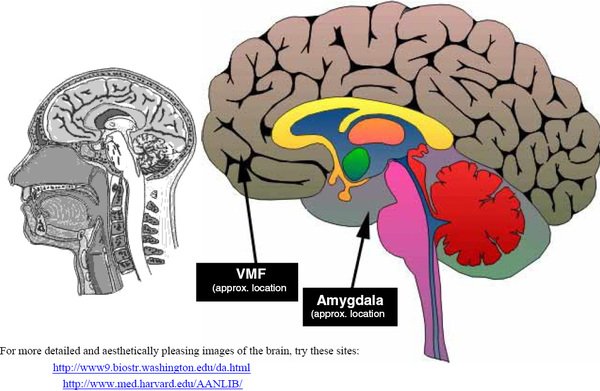


Neuroimaging studies have shown that specific parts of that circuit, such as the vmPFC and the amygdala, differ structurally and functionally in PTSD patients, compared to healthy individuals. Specifically, in Wlassoff’s article, he explains how in PTSD, changes in the vmPFC such as reduced volume of the cortex, along with its decreased function ability, have been shown. He explains that the vmPFC is the part of the brain that is responsible for regulating the emotional responses that are triggered by the amygdala.

He also explains how traumatic experiences appear to increase activity in the amygdala, and that PTSD patients show hyperactivity in the amygdala in response to stimuli that are related to their traumatic experiences.

This prevailing neurocircuitry model explains the stimulus in our environment is capable of inducing fear by triggering activity in the amygdala, which in turn triggers the physiological and subjective experience of fear. Neuroscientists have come to believe that activity in the amygdala is regulated by the vmPFC, and this has been shown by many studies, such as anatomical tracing studies in primates that have shown very dense projections from the vmPFC to the amygdala.

Dr. Michael R. Koenigs, who came to talk at our Neuroscience Seminar this semester, also described other studies that have also shown how vmPFC activity is inversely related to amygdala activity, but that this is not necessarily the case with people suffering from depression. He therefore shed light on the fact that although the vmPFC is important for coordinating activity across a complex network including the amygdala, the conventional neurocircuitry model of vmPFC function is incomplete.

Koenigs demonstrated this by discussing the findings of several studies. For example, he studied American combat veterans who fought in the Vietnam War, including ones with brain damage. Amongst the people he studied with vmPFC damage, he found that these subjects were actually less likely to suffer from depression. Furthermore, he discussed another study of a 30 year old woman who suffered from severe depression for more than 10 years. The woman attempted suicide with a gunshot to the head, and although she survived, damaged her entire vmPFC. After the attempt, she showed no signs of depression whatsoever.

These studies demonstrate that although it is known that vmPFC and amygdala dysfunction is related to symptoms of PTSD, saying that it it is only these two factors, and that these work in a causal manner to bring about PTSD symptoms, would be incorrect. The studies Koenigs discussed have shown that we still have a lot more research to do to fully understand the neurobiology of psychiatric disorders such as PTSD.


Works Cited

Wlassoff, Viatcheslav. "How Does Post-Traumatic Stress Disorder Change the Brain?." Brain Blogger. N.p., 24 Jan 2015. Web. 06 Dec. 2015. <http://brainblogger.com/2015/01/24/how-does-post-traumatic-stress-disorder-change-the-brain/>.

Koenigs, Michael. "Revising Neurocircuitry Models of Mood and Anxiety Disorders Based on Evidence From Brain Lesion Patients and Psychopathic Criminals." Neuroscience Seminar. Loyola University Chicago, Chicago. 10 Nov. 2015. Speech.

The Future of Familial Alzheimer's

Back in October, I had the chance to hear Professor Robert Morrison from the Neuroscience department at Loyola University Chicago speak about Alzheimer’s Disease; its symptoms, causes, and chances for treatment. This presentation sparked my interest in the different types of onset involved in Alzheimer’s, and how these seemingly different conditions were being treated and researched. I became most curious about Early Onset Alzheimer’s Disease (EOAD) because of its genetic linkage and new potential in treatment methods for treatment of Alzheimer’s.

According to Alzforum, an online information and news resource for Alzheimer’s Disease research and diagnostics, EOAD is linked to mutations in the following three genes: amyloid precursor protein (APP), presenilin-1 (PS1), and presenilin-2 (PS2).

While exploring this topic further, a tragic story about a Colombian family’s experience with Early Onset Familial Alzheimer’s Disease (EOAD) caught my interest most [see attached New York Time’s article A Vanishing Mind: Alzheimer’s Stalks a Colombian Family]. This family lives in a secluded region of Colombia called Antioquίa and is the largest family in the world to have Early Onset Familial Alzheimer’s Disease; over 5,000 people are included in this disease-stricken lineage. The disease carries drastic consequences for those affected in this family: symptom onset between ages 30 to 50, lack of access to treatment and medication, and lack of medically-educated caretakers.

Dr. Francisco Lopera, a local neurologist who has been studying this family for over 28 years, states, “this is the only place in the world where we can find a family like this, where it’s possible to do prevention therapy more easily”. Through years of research, Lopera was finally able to discover which mutation caused this family’s EOAD: a mutant chromosome 14 presenilin 1 gene. This mutation is called the Paisa mutation, and it has become the basis of a research project that could potentially hold the key to Alzheimer’s treatment and prevention not only in Colombia, but worldwide. This family offers a great opportunity for scientific research since most of the extended family with the gene mutation live in the same location and lead similar lifestyles, allowing research to provide data free of inconsistencies that would likely skew data from more randomized populations. Experimental treatment for this family is likely to involve medications which attack the beta-amyloid protein, which is known to create plaques between neurons. Other more in-detail experimental methods can be found on the New York Time’s article included in the references section. This article also includes a documentary video of this family, which I believe to be a very powerful tool in making the general population relate to these humans on a more personal level.

Sources:
http://www.alzforum.org/early-onset-familial-ad/overview/what-early-onset-familial-alzheimer-disease-efad
http://www.nytimes.com/2010/06/02/health/02alzheimers.html?pagewanted=all&_r=0

Image:
https://i.vimeocdn.com/video/539243581_640.jpg


Environmental Enrichment Developmental Effects


A study of conditions associated with the socioeconomic standing (SES) of a household holds cognitive ability as a product (Hackman 2015).  Factors contributing to SES include income and social standing from educational level and occupation. Various research groups all indicate that the better the SES, the better students performed on the given tasks. For example, in a study done of kindergarten students, those who fell in the median SES range outscored their lower ended classmates. From the metastudy by Hackman, results attained tested were based on the following tests take “Lipina et al. [27] reported that infants from lower SES families are, on average, less advanced in the working memory and inhibitory control abilities needed to pass the‘A not B’ test [34]. In a study of 6 year-olds using Posner’s Attention Network Task [35], Mezzacappa found pronounced SES disparities in the ‘executive attention’ measure [29]. Studies of adults with neuropsychological tests converge on the same conclusion, showing SES disparities in tests of executive function [30,31]” (Hackman). Behind the didactic advantages resulting from superior SES are neurophysiological implications. Hackman reported retardation in cortex development in children of lower SES, but other unknown deficiencies still need to be studied.
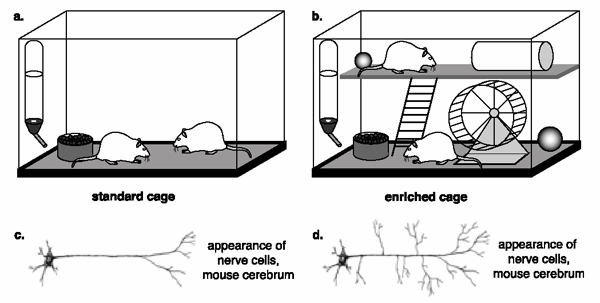
In a study of rodent neurological development following environmental enrichment measured their cognitive abilities by measuring locomotor activity. To begin, rats were placed in different a variety of environments, “ In the physically enriched condition (PE), animals were single-housed in standard rat cages (40 cm × 20 cm × 20 cm) and a variety of toys (durable dog and cat toys, e.g., colored textured balls, rings, and bones) were placed in the cage to provide physical and tactile stimulation. Objects were removed two to three times per week and were replaced with new object…” (Elliot). Further the rats were given greater social opportunities “In the socially enriched condition (SE), animals were housed in groups of three same-sex rats in larger rat cages (46 cm × 36 cm × 20 cm) to avoid social crowding. In the physically and socially enriched condition PESE, animals were housed in groups of three same-sex rats in the same-sized cages (46 cm × 36 cm × 20 cm) and were provided toys according to the procedures described above” (Elliot). Once acclimated, rats were observed and periodically locomotive activity, a function of neural development was measured. Results indicated that rats placed in environmentally enriched areas recorded higher levels of locomotion compared to those in less enriched. This indicates that neural development in the enriched rats is greater than that of the those deprived of toys and company. One suggestion for this account is greater stimulation associated with social interaction, but further studies are required to test the effect of social interaction only as the access to toys could have impacted cognitive development as well.

Works Cited:
Elliot, Brenda. "Effects of Social and Physical Enrichment on Open Field Activity Differ in Male and Female Sprague–Dawley Rats." Effects of Social and Physical Enrichment on Open Field Activity Differ in Male and Female Sprague–Dawley Rats. Elsevier, n.d. Web. 09 Dec. 2015.

Hackman, Daniel. "Socioeconomic Status and the Developing Brain." Cell Press (2009): n. pag. Web.

Image URL:
https://scientiaportal.files.wordpress.com/2015/11/mice-raised-in-an-impoverished-environment-a-show-less-dendrite-growth-c-than-do-mice-raised-in-an-enriched-environment-b-dfor-your-classroom-useonly.gif?w=638&h=328


Optimized Learning via Interleaved Practice

The ability to enhance and built upon one's knowledge base serves as an integral tool in the development of many facets of life. Whether it be training to improve one's performance in a sports setting or an attempt to learn material for an exam, studies have shown ways in which one can better his or her chances of success. Dr. Barbara Knowlton recently came to Loyola University Chicago and talked to neuroscience students about her work with a study titled, "Brain-behavior correlates of optimized learning through interleaved practice" (Lin et al). In her talk, Dr. Knowlton described two different kinds of learning: block and interleaved. Block learning is the concept of learning material in a repetitive AAA, BBB, CCC fashion whereas interleaved learning is the concept of learning material in a more random ABC, ABC, ABC fashion. This learning manipulation is known as the contextual interference (CI) effect. The CI effect is an example of a desirable difficulty: a concept describing the notion that the introduction of challenges for learners can actually result in more robust learning (Schmidt et al). As a result, block learners perform better during the practicing of the new material, but then perform inferior on a retention exam. In contract, those who practice and learn the new material via interleaved practice performed inferior during the practice phase, but superior during the retention phase. This illustrates the benefit of interleaved practice as it leads to better long-term understanding of material.

The study Dr. Knowlton spoke about served to expand, in part, upon these learning concepts by identifying if "neural activity reflects the paradoxical effect of CI on practice and retention" (Lin et al). During the study of interest, blood-oxygen-level-dependent (BOLD) signal fMRI and cortical excitability via paired-pulse transcranial magnetic stimulation (ppTMS) were used as measures for neural activity. Neural activity can be used in such a way to confirm the CI effect because previous studies have shown that increased task complexity translates to a more intense BOLD signal. That being said, Lin at al hypothesized that neural activity would be greater during interleaved practice than block practice because of the increased difficulty of the interleaved practice. However, during the retention exam, it was hypothesized that the neural activity would be lower for those who partook in interleaved practice because, according to the CI effect, the interleaved practice lead to more robust learning and thus the retention task was less difficult. As a result, those that partook in block learning, were predicted to display higher neural activity during the retention exam because of the lack of robust learning and thus increased difficulty during examination.

Results showed that higher BOLD signals during the retention test for post block practice participants in comparison to post interleaved practice participants, thus confirming Lin et al predictions. With finals in full force, the Loyola community and students in general can benefit greatly from this work. It seems counterintuitive to study for an exam by doing practice problems in a completely random order, however, these finding show just how beneficial that can be. When it comes to organic chemistry, for example, and the countless different reactions, students might want to try synthesizing an alcohol and then an alkene and then maybe an ether and so on rather than going one function group at a time. It will certainly seem more difficult at the time, but come the organic chemistry final, you will be thanking yourself and Dr. Knowlton for her expertise.

Resources:

Lin, C., Knowlton, B., Chiang, M., Iacoboni, M., Udompholkul, P., & Wu, A. (2011). Brain-behavior correlates of optimizing learning through interleaved practice. Neuroimage, 56(3), 1758-1772.

Schmidt, R.A., Bjork, R.A., 1992. New conceptualizations of practice: common principles in three paradigms suggest new concepts for training. Psychol. Sci. 3, 2007-217.

Study Smarter

Finals. Just the word can incite feelings of fear and anxiety in any typical college student. Due to busy schedules, obligations to work and other activities, time constraints, and procrastination, many college students find themselves in the unfortunate situation of cramming for a cumulative examination the night before it is scheduled to take place. Consequently, many of these students get minimal amounts of sleep the night before the exam and instead spend their night attempting to memorize a semester’s worth of information.
                Dr. Barbara J. Knowlton and fellow researchers at the University of California – Los Angeles, have done significant work with regard to discovering methods that make learning information more efficient. Knowlton and her colleagues have found that certain “desirable difficulties” created when a person is studying results in a greater ability to memorize information. One of these “desirable difficulties” that improved learning in memorization tasks is contextual inference. Contextual inference refers to learning information in an interleaved order instead of memorizing the information if a repetitive manner. Even though contextual inference made practicing information more difficult, learners benefited from the desirable difficulty. Learners is the contextual inference group had lower response time, higher frontal–parietal blood-oxygen-level-dependent signal and greater motor cortex excitability during testing, all of which are consistent with superior learning.  
                Furthermore, minimal amounts of sleep has many negative effects on our bodies, including decreased reaction time and cognitive function, and increased difficulty in learning. In a recent study published in Psychological Science by researchers at the University of California and Michigan State University found that individuals who slept for fewer than five hours, but were not totally sleep deprived, were significantly more prone to creating false memories, compared to other individuals who had received adequate amounts of sleep. This finding further demonstrates the fact that cramming for an exam the night before it is administered and choosing to study more rather than getting an adequate amount of sleep has a detrimental effect on how one would perform on that exam. The creation of false memories from lack of sleep hinders the performance of test takers, and it should be avoided in all situations in which one’s cognition and memory is tested.
If a student finds his or herself faced with a daunting exam requiring the memorization of a plethora of information at the end of this semester, it is highly suggested that they start studying early, study the information in a non-repetitive order, and get more than five hours of sleep the night before to avoid the creation of false memories.  


Knowlton, Barbara J. et al. "Brain–behavior correlates of optimizing learning through
interleaved practice." Neuroimage 56 (2011): 1758-1772. Web. 8 Dec. 2015.


Oaklander, Mandy. "Less Than 5 hours of Sleep Leads to False Memories." Time. Time, 11 Sept.
2014. Web. 8 Dec. 2015. http://time.com/3328149/sleep-deprivation-false-memories/