Thursday, October 16, 2014

How conscious are they?

                 Currently, there is plenty of uncertainty about what an individual in the vegetative state can and cannot do. A person is usually considered to be in the vegetative state when they are unable to talk or voluntarily move. In order to gain further understanding in this ongoing area of research, scientists at the Medical Research Council Cognition and Brain Sciences Unit (MRC CBSU) and Cambridge University subjected patients in the vegetative state to auditory stimuli. They then conducted the same procedure on healthy volunteers for comparison purposes. According to the article “Patient in vegetative state not just aware, but paying attention, study suggests,” the researchers found that one of the patients reacted to and was able to focus on certain “target” words in a manner that resembled the healthy volunteer. The patient, just as a healthy individual could, “was able to filter out unimportant information and hone in on relevant words they were being asked to pay attention to,” according to the article. What’s even more remarkable is that after utilizing fMRI for brain imaging, the researchers noticed that the patients were capable of following simple commands directed towards them. These findings by the researchers indicate the level of consciousness that some patients in the vegetative state retain. According to the article, these findings also open the gateway for further communication with vegetative state patients, and may potentially lead to the improvement of communication abilities of the patients with the outside world.
                      
                      In Daniel Bor’s book The Ravenous Brain, Bor mentions that a supervisor of his named Adrian Owen conducted a similar study in which he subjected patients in the vegetative state to auditory stimuli, and also put them in the fMRI scanner to observe their reactions to the stimuli. Owen grouped the patients into four categories based on the level of response that they displayed to the stimuli. He managed to find two patients who ranked in the highest category of responsiveness, which was the “ability to process the meaning of words.” (Bor, 227) By observing the reaction of these patients to auditory stimuli, Owen was able to determine to a certain degree their level of consciousness as well. He was able to set certain criteria that needed to be met by the patients for them to be classified into a certain category.  Owen also added on to the study mentioned above by noting that their level of consciousness could help determine or predict “how much they would recover six months down the line.” (Bor, 228) Owen’s study seems to have added another aspect to the previously mentioned study by taking into account the prognosis of the vegetative state patient. The findings of both of the studies provide insight that should be very helpful for the future of this area of research. As more becomes known about the vegetative state through similar studies, a cure may be in arms reach.
Bor, Daniel. The Ravenous Brain: How the New Science of Consciousness Explains Our Insatiable Search for Meaning.  New York: Basic, 2012.  Print.
 
University of Cambridge. "Patient in 'vegetative state' not just aware, but paying attention, study suggests." ScienceDaily. ScienceDaily, 31 October 2013. <www.sciencedaily.com/releases/2013/10/131031110558.htm>.

A fine line between our unconscious and conscious mind


           There is a lot of debate about how much of our unconscious mind participates in our ability to make decisions or process information before we become aware of these thoughts. Megan Gannon wrote about this topic in the article: “The Unconscious Brain Can Do Math,” where participants were exposed to a phrase to one eye and flashing colors and shapes to the other eye. This served as a distraction/control to determine the length of time it took the person to become aware of what the words in the phrase were. The reaction was measured by the amount of time it took for the participants to push a button once they realized the words. They concluded that unusual sentences that don’t typically make sense were registered faster than those that did make sense. For instance, “I cooked a child.” would be registered at a faster rate than “ I cooked dinner.” The surprising phrases stood out more because they are not something people are used to reading and therefore people are capable of realizing the words faster.
            The second part of this study involved the unconscious mind “performing” math problems. Similar to the technique listed previously (using a distraction in one eye and a focused stimulus in the other), the experimenter presented a sequence of numbers for less than 3 seconds that resembled a math problem, for example, “6-2-3.” After this, a number would be presented, without the distractions in the other eye, to the participant to read out loud. The experimenter concluded that the correct answer to the equation was read much faster than other numbers presented. For the example above, “6-2-3,” the number “1” would have been processed faster and said out loud more quickly than any other number. These results led the experimenters to conclude that the participants were subconsciously solving the problem in their head without knowing it was an actual equation. This led them to be able to recognize and speak the number that answered the equation faster.
            The experiment reflects the concept/question of how or when our subconscious is involved in our thoughts. A study mentioned in the chapter “Feeling your Way to Knowledge” in The Ravenous Brain by Daniel Bor addresses this same issue. Bor mentions a study that shows participants sets of random letters, as opposed to structured sentences, that are supposed to be memorized. After this, the participant is informed that the sets followed certain rules but the rules remained unknown. They were then exposed to new sets of letters and had to respond saying that they followed or did not follow the rules. Most people believe that they would be guessing but the studies resulted with people getting a good number of answers correct. Both studies mentioned by Bor and by Gannon represent the initial claims that our unconscious mind is capable of making connections between two stimuli prior to us becoming aware, or conscious, of it. However, as mentioned in The Ravenous Brain, the conscious is always looking for patterns and the potential meaning of whatever is presented to us. These thoughts can dissipate when trying to accomplish a task. In the instance of the Gannon study, the conscious brain probably saw the sequence of numbers as an equation without being told it was mathematical because it could make the connection of the “-“ to a minus sign in subtraction equations that the brain has been previously exposed to. Since the participant was not instructed that it was a math equation, that thought was pushed aside when they had to focus on the next task of calling out numbers. Due to the fact that this thought was present causes the person to react faster to the answer of the equation rather than an unrelated number. It was easier for the brain to recall a number that already was present consciously but ignored.
            Bor mentions that one cannot deny that conscious learning is present in these studies, so it is a combination of our unconscious mind and our phenomenal consciousness that make these connections between the stimuli. In order for us to learn and recognize patterns in such depth requires our consciousness whether we are aware of it happening or not.   


References:
Gannon, M. (2012, November 15). The unconscious brain can do math. Scientific American. Retrieved from http://www.scientificamerican.com/article/the-unconscious-brain-can-do-math/

Bor, D. (2012).The Ravenous Brain: How the new science of consciousness explains our insatiable search for meaning. New York: Basic Books.

Ambiguities of Consciousness

            Although scientific advances have allowed us to travel to the moon and back, there is yet no concrete understanding of consciousness. Consciousness is what seemingly drives our everyday actions and yet we have no idea how it is created in the brain or what it is exactly. This imperfect understanding of consciousness and in turn unconsciousness therefore, limits success in several sectors of the healthcare system.
          
            One such sector that is limited by the ambiguity of consciousness is that of anesthesia. The article titled What Anesthesia Can Teach Us About Consciousness by Maggie Koerth-Baker claims that .13 percent of the time the effects of anesthesia go awry. Even though the rates of success in anesthesia are high, the one or two failures in a group of a 1,000 people force us to inquire as to why that is the case. Since the field of anesthetics is centered on using specific drugs to control the consciousness of a patient, it becomes essential for us to have a complete understanding of consciousness in order to perform successful anesthesia.
            The article states that because there is not a way to measure consciousness directly, neuroscientists are looking to study neural correlates of consciousness – the changes in brain function when a person shifts from being conscious to unconscious. They performed a study that stimulated patients’ brains at different levels of consciousness and compared their brain activity. They discovered that when the patient was awake and conscious, the electrical signal travelled all around the brain. When the patient was unconscious, the signal remained localized and eventually faded away. This discovery supports a theory of consciousness that states that sensory networks in the brains of an unconscious person are locally functional but the communication between different parts of the brain is compromised. The analogy described in the article that clarified this concept was imagining that the lights are on in the neighborhood, but "the Internet and phone lines have been cut". It's fascinating to imagine consciousness to be so simple and yet so complex. Increasing support for this theory allows some neuroscientists to conclude that the synthesis and integration of information between the different parts of the brain provides the best measure of consciousness.  
            Additional research and significant results in correspondence with this theory can substantially decrease the uncertainties involved with diagnosing a patient’s state of consciousness. As Daniel Bor describes in The Ravenous Brain, a patient that is entirely unconscious with his eyes always closed is in coma. If there are signs of awareness, such as the opening and closing of eyes, the patient is in a vegetative state. When a patient shows slight awareness and responds to stimuli, he is in a minimally conscious state. Although many patients can make a recovery from a vegetative state, about half of them do not. The longer a patient remains in the vegetative state, the lower his chances of recovering from that state. Additionally, it is extremely difficult to ascertain the difference between a patient in a vegetative state and one in a minimally conscious state. Methods that distinguish between the states of consciousness of a patient similar to the one described by the article can have a substantial effect in helping healthcare professionals classify the conscious level of a minimally responsive patient. Even though classifying a patient’s state of consciousness is only half of the battle that doctors and family members have to struggle through, it can allow them to determine the best course of action for the patient with less ambiguity. Therefore, I believe that more research should be done in order to develop an appropriate method of measuring consciousness. This will not only assist in developing a more successful method of anesthetization, but will also give doctors a better understanding of the conscious state of a patient that will allow them to better approach his condition. 

Bor, Daniel. The Ravenous Brain: How the New Science of Consciousness Explains Our Insatiable Search for Meaning. New York: Basic, 2012. Print.

Koerth-Baker, Maggie. “What Anesthesia Can Teach Us About Consciousness.” The New York Times. The New York Times, 10 Dec. 2013. Web. 16 Oct. 2014. <http://www.nytimes.com/2013/12/15/magazine/what-anesthesia-can-teach-us-about-consciousness.html?pagewanted=all>.

The Connection Between Neural Fibers and the Over Conscious


With diseases and disorders one of the most important factors to always consider is early detection. In the case of autism, studies show that behavioral signs are usually assessed in toddlers when they are about 2 years of age. This is when the first behavioral and language symptoms of the disorder arise and are noticeable. There is a drive to find a way to detect at risk infants earlier since early intervention can be beneficial and prevent more difficult cases of autism.
In the American Journal of Psychiatry researchers say that they may have found a tool to detect the highest at risk infants at a mere age of 6 months. This test is known as fractional anisotropy, which measures the density of white matter (the part of the brain rich in nerve fibers that makes up major neuronal pathways). The scientists recruited 92 infants from the Infant Brain Imaging Study Network; all of them were considered to be high risk because they had at least one older sibling affected by autism. The scientists measured the density of the babies’ nerve fibers in the brain and then tracked to see who would end up being diagnosed with autism and who did not. Results showed that those diagnosed with autism were more likely to show thicker, denser nerve fiber endings at 6 months compared to those who did not develop the disorder. By the time the affected infants reached age 2, they had thinner white matter than those who did not develop autism. Geraldine Dawson, chief science officer of Autism Speaks and professor of psychiatry explained that these results suggest early on these neural networks are not developing normally. Among 15 nerve fiber tracks that were looked at, 12 showed abnormal development patterns. This also shows, biologically, that whatever is driving autism is not restricted to one area of the brain. This makes sense because behavioral symptoms involve language and social interactions—which require different areas of the brain. In the above image the red and orange represent the abnormal nerve fibers, and span in different areas of the brain. 

Author of The Ravenous Brain and neuroscientist, Daniel Bohr, visits the topic of autism in his book. He explains that this disorder is defined by social impairments and the individual may have a lack of understanding of thoughts and emotions of others, poor language skills, and repetitive behaviors. Unfortunately many coin the autistic as mentally retarded when the disorder is widely misunderstood throughout society. Bohr states an emerging theory that those with autism are not necessarily defined by a lack of mental skills, rather they experience a superfluous amount of information at once—they are over aware. Connecting back to the study conducted with fractional anisotropy this theory of over-awareness makes sense. If the individual is experiencing vast amounts of information at once it would be probable that nerve fiber tracks would in fact grow abnormally if multiple signals are traveling through at once. Bohr assures the reader that autistics are not mentally retarded, those in the sub branch of autism usually have a raised IQ. Due to autistics’ having an overflow of conscious awareness they often find comfort in crafting structure or highly ordered things such as mathematics. The order within these hobbies may require use of only a couple of nerve fibers restricted to one area of the brain reducing the stress on it and reducing the overall discomfort autistics experience in loud or chaotic situations.
Although the study performed with brain imaging proves to be helpful in early detection it does not necessarily mean these thin abnormal fibers are the cause of autism. These images should be used as tools or markers to detect high risk infants as early behavioral therapy can improve cognitive development and make things easier for the individual with autism.

Bor, Daniel. The Ravenous Brain: How the New Science of Consciousness Explains Our Insatiable Search for Meaning.  New York: Basic, 2012.  Print.

Park, A. (2012, February 17). Brain Imaging Could Detect Autism Risk in Infants as Young as 6 Months. Retrieved October 16, 2014, http://healthland.time.com/2012/02/17/brain-imaging-could-detect-autism-risk-in-infants-as-young-as-6-months/


The Vegetative State: Is it Really Time to Pull the Plug?

           One of the most controversial cases of medicine was that of Terri Schiavo, whose husband was persistent on filing petitions to have her feeding tube removed in order to pass comfortably and whose parents were on the completely opposite side of the spectrum and fought for her right to live. Terri, who suffered massive brain damage resulting from an eating disorder, had been stuck in a vegetative state for eight years with no apparent signs of awareness. Although her husband won the case and Terri passed away after removal of her feeding tube, many still wonder whether “she was still there” and “could there have been a treatment in the near future that could have restored her awareness” (Bor 225). 
           
            Daniel Bor in The Ravenous Brain explains that in order to really understand the vegetative state and the complete loss of awareness, one must distinguish between the permanent vegetative state (PVS) and minimally conscious state. The latter can only be applied when a patient has showed signs of improvement that may include, but are not limited to, tracking an object with his/her eyes or responding to commands (Bor 222). The issue is when outward signs of wakefulness occur; for example, slight, erratic movements. In many cases, these types of responses do not even require consciousness and provide false hope of recovery. The vegetative state is linked to damage to the thalamus and prefrontal cortex (Bor 225).
 
So, the question is can patients in the vegetative state recover and regain normal consciousness? Bor says that many patients do have a chance, although half do not. The longer the time spent in the vegetative state, the less likely the patient is to recover, however. He describes that currently, there are better behavioral assessments becoming available; for example, better-defined rating scales and serve as diagnostic markers placing patients into categories (Bor 226). Bor also talks about communication via brain scanners. These devices are able to detect brain activity, which potentially detects any level of awareness of the brain in vegetative patients. The only disadvantage with this method is that negative results are hard to interpret (Bor 230). Irrelevant or excessive movements are likely to disrupt the results. Bor agrees that these methods are not even close to be considered effective clinical tools, but does state that this will change in the next five years or so.

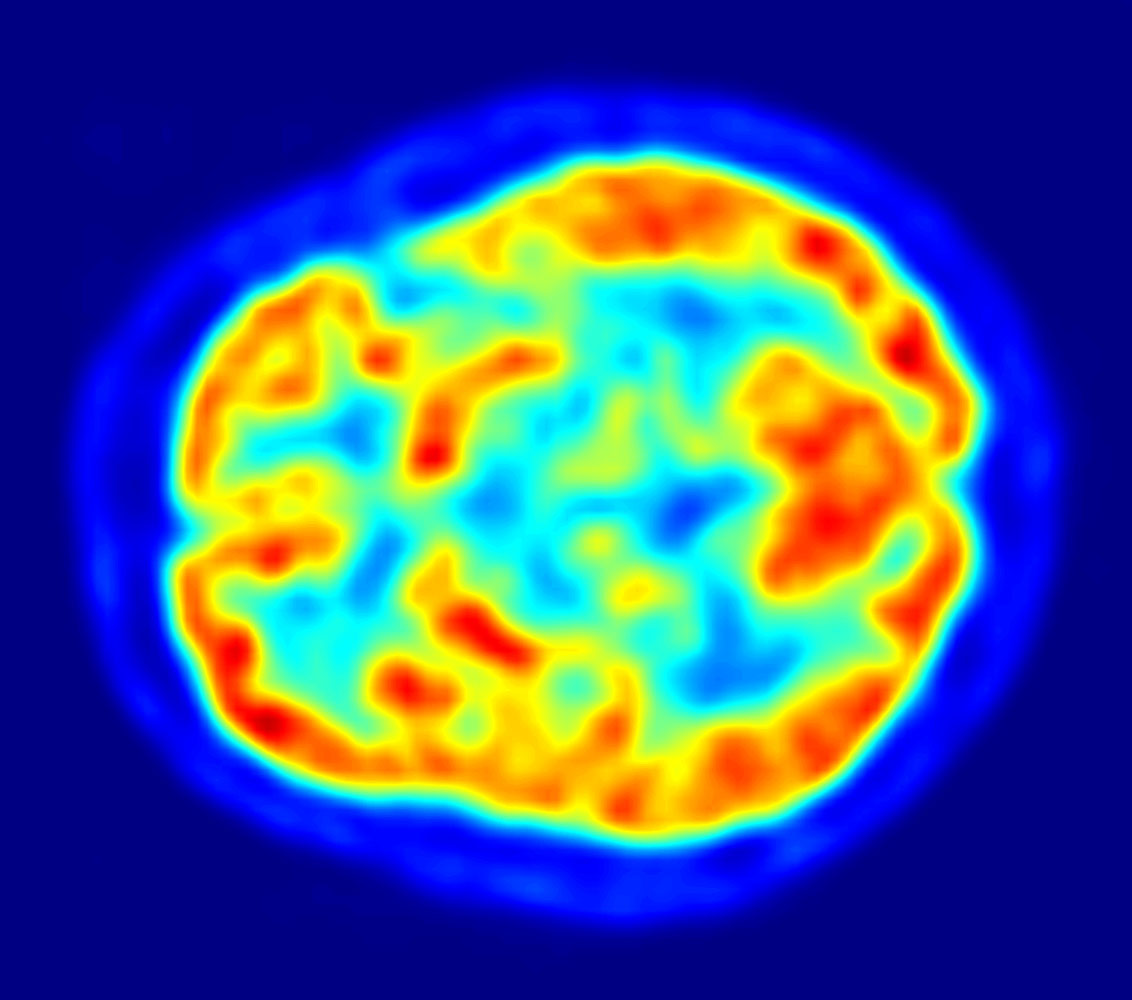
http://upload.wikimedia.org/wikipedia/commons/c/c6/PET-image.jpg
In the article Study: New Technique Predicts Consciousness of Brain-Damaged Patients by Alexandra Sifferlin, new research has provided evidence that physicians are now able to determine when a patient is likely to recover through a brain imaging technique known as PET (positron emission topography). In this study, researchers found that out of one hundred twenty-six patients with severe brain damage, a small proportion of patients were able to retain brain activity as detected by recorded PET scans. A behavioral test was used in accordance with this diagnosis, but it was found that the PET scan was needed for confirmation. Nonetheless, researchers still claim that this is not an “exact science”. Regardless, it leaves much doubt whether a patient in a vegetative state should be taken off life support.
 
Work Cited:

Bor, Daniel. The Ravenous Brain: How the New Science of Consciousness Explains Our Insatiable Search for Meaning.  New York: Basic, 2012.  Print.

Sifferlin, A. (2014, April 15). Study: New Technique Predicts Consciousness of Brain-Damaged Patients. Retrieved October 17, 2014, from http://time.com/63928/study-new-technique-predicts-consciousness-of-brain-damaged-patients/

How Unconscious Are You?

          One of the things I enjoyed the most from volunteering in a hospital was seeing individuals in their recovery room after surgery. They were always in a cheery childish mood due to the effects of anesthesia given to them before their surgery. But how is the anesthetic able to cause this giddiness? What does this show about consciousness in that an adult goes from being a properly mannered individual when fully conscious to behaving in a childish way when recovering from surgery?
Daniel Bor discusses anesthesia in his novel The Ravenous Brain due to its ability to help in understanding an unconscious mind that is healthy and functional. He had surgery in the past that required him to take an anesthetic. After the surgery he admitted that he felt like he was in a drunken state and was even making inappropriate jokes to the nurse (81). But what does anesthesia even do to cause this unconsciousness? Bor says that the way that anesthesia works is that it increases the production of a neurotransmitter called gamma-amino butyric acid (GABA), which lowers neuronal activity. An anesthesiologist then ensures that the patient is fully unconscious by using a technique called electroencephalography (EEG). This involves attaching various electrodes across the scalp which detects the combined local electrical activity emitted by neurons (88). However, sometimes this process is faulty.

            Bor's discussion about anesthesia connects to an article in the New York Times called, “What Anesthesia Can Teach Us About Consciousness”. The article states that for every 1,000 people who undergo anesthesia, there will be one or two people who are not as unconscious as they seem. They are awake during the procedure but are unable to move or show signs that they have not fully gone unconscious, resulting in traumatizing experiences. Scientists are looking for a way to not only learn about consciousness from anesthesia, but also for ways to improve the method of checking to see whether an individual is fully unconscious.
           To improve methods of checking the conscious state of an individual undergoing anesthesia, neuroscientists are searching for what they call “neural correlates of consciousness”. These are changes in brain functions when a person is transitioning from a conscious to unconscious state. Researchers from the University of Sao Paulo and University of Wisconsin, Madison stimulated subjects’ brains with a magnetic field and used EEG to trace the path the pulse took. They found that if the patient is conscious, the electrical pulses travel all around the brain. However, if they are unconscious, the pulse tends to stay localized and just fades away. This means that sensory networks in the brains of unconscious people are functional, but interbrain communication has broken down. This study shows that unconsciousness happens when different parts of the brain cannot connect. This suggests that anesthetics work by cutting the lines of communication to the brain. Some scientists are suggesting creating a monitor that focuses on the brain’s ability to communicate with itself, so seeing the connections the brain makes and not just the overall electrical activity. Activity in conscious brains shows “recurrent processing” which are signals are sent from the sensory area to the processing area and back again. Therefore, doctors are able to see if a person is unconscious if these recurrent processes are not showing in the brain.

            Anesthesia has allowed for numerous discoveries into the unconscious individual. It helps explain why the patients I saw in the recovery room behave in a childlike manner. The anesthesia caused blockage of many signal connections throughout the brain, so when the patient is recovering, the signals are slowly reconnecting. Perhaps the patients behave in a childlike manner because the signals throughout their brains in the recovery stage are not as fully connected as when they are conscious. Whatever the cause, scientists and Bor have been able to gain great insight into the brain and consciousness thanks to the workings of general anesthesia.

Bor, Daniel. The Ravenous Brain: How the New Science of Consciousness Explains Our Insatiable Search for Meaning.  New York: Basic, 2012.  Print.

Koerth-baker, Maggie. “What Anesthesia Can Teach Us About Consciousness.” The New York Times. The New York Times, 14 Dec. 2013. Web. 16 Oct. 2014.

Wednesday, October 15, 2014

In the blink of an eye, a wiggle of a toe...

Severe brain injuries can tragically transform an individual from a fully conscious and healthy state to a vegetative one, leaving family members and loved ones in complete despair.  In the case of severe brain injury, there is not one term to describe a patient’s immobility.  There currently exist two widely used, yet difficulty distinguishable, terms: vegetative and minimally conscious.  A vegetative state is usually considered slightly better than a coma, but patients that are in a vegetative state cannot respond to commands or movement well, if at all, so doctors have a difficult time determining whether consciousness is present. Previously, if a patient was in a vegetative state for more than about 5 months, the case was considered hopeless, in that there was no indication that the patient would improve cognitively.  Recent research, however, seeks to narrow the scope on measuring “consciousness” and through the re-creation of its definition, doctors are beginning to shed a new light on treatment for patients that may be in the minimally conscious state after all.  
            The definitive marker for a patient declared as minimally conscious as opposed to a patient declared vegetative is if he/she is able to respond to a command to raise one’s arm, for example, according to chapter 7 in Bor’s The Ravenous Brain: How the New Science of Consciousness Explains Our Insatiable Search for Meaning.  The term “minimally conscious” demands clarifications of specific definitions, specifically consciousness.  Isn’t being conscious not simply the ability to move one’s arm, but a mental state as well?  Just because a patient is immobile, isn’t it possible for that patient to have fully developed, a.k.a. “conscious”, thought processes?  Luckily with modern technology and different brain scan techniques, scientists and doctors are getting closer to a more well-defined answer. 
In a New York Times article entitled “A Drug that Wakes the Dead”, Dr. Whyte discusses one of many new techniques used for studying the neuronal processes involved in a patient who can be diagnosed as “minimally conscious” and is leading a team of researchers that have discovered the profound and surprising effect of Ambien on the recovery of brain-injured patients.  The article focuses mainly on one case of a 26 year-old brain injury victim, Chris, who was able to move from the vegetative state to the minimally conscious to the surprise of his doctors.  In the first few days of his accident, doctors suggested to his parents to “pull the plug” on Chris because there was little sign of any recovery, but the parents kept him alive.  After several weeks, the mother began noticing purposeful eye movement in her son and his ability to follow simple commands such as “wiggle your toes” and it was through these observations that his mother was able to convince the doctors to change their diagnosis from vegetative to minimally conscious.  Chris also became part of a new study lead by Dr. Whyte, director of the Moss Institute, that involves the treatment trials of the drug zolpidem, the generic name for Ambien, for patients in a vegetative and/or minimally conscious state.  In recent trials, the drug has awakened several subjects in a fully conscious state, recognizing family members and favorite athletes, lasting for 2 to 3 hours, after which they slip back into their previous state.   The New York Times article also discusses another finding by Whyte fueled by his passion to lessen the biases and confusion surrounding a clinician’s diagnosis of consciousness.  He developed the “’single-subject assessment’, in which doctors design a set of tests specific to each patient’s idiosyncrasies to determine whether the patient is vegetative or minimally conscious.” (NYT)  Although this is a lengthy and time-consuming procedure, the results are highly accurate and efficient in determining the earliest possible diagnosis of being minimally conscious, thus ensuring the most efficiently developed treatment plan specific to that patient’s needs. 
Whyte is not alone in his dedication to clearing the haze surrounding the clinical diagnosis of consciousness, and in chapter 7 of Bor’s The Ravenous Brain: How the New Science of Consciousness Explains Our Insatiable Search for Meaning, the work of Adrian Owen provides a similarly deeper look into this groundbreaking research.  Adrian Owen has indicated through EEG scannings of immobile patients that neuronal firing occurs with demands.  Owen’s research involves the use of neuroimaging and fMRI scanners to record brain activity when patients are given commands or receive certain auditory stimuli.  What he found was remarkable: when a patient declared to be in a vegetative or minimally conscious state were read a complex sentence or a sentence containing ambiguous words (for example, “The shell was fired towards the tank” [Bor]), the recordings of associated activated brain regions were the same when compared to healthy, functioning individuals.  These are phenomenal results, because it completely redefines the definition of consciousness as an inner, cognitive, and measureable phenomenon rather than a measurement of a simple command-gesture diagnostic evaluation. 
Nearly 40% of patients that are minimally conscious have been declared to be in a vegetative state, and this may be largely due to the amount of dissonance between clinicians on a clear and concise definition of what being “conscious” truly means and, equally as important, how a state of consciousness can be measured.  Through the research involving neuronal stimulation, neuro-imaging, and new drugs and a more meticulous observation of purposeful vs. reflexive movement in vegetative or minimally conscious patients, doctors and neuroscientists are coming closer to developing a new definition of consciousness.  Through the further development of these research projects, and the newfound hope for previously declared-hopeless-patients, the idea of brain injury recovery and rehabilitation will be transformed, and the medical advances that will arise from such findings will quite literally affect and change countless lives. 

Interlandi, J. “A Drug the Wakes the Near Dead” The New York Times.  The New York Times, 1 Dec. 2011. Web. 13 Oct. 2014.

Bor, Daniel.  The Ravenous Brain: How the New Science of Consciousness Explains Our Insatiable Search for Meaning.  New York: Basic, 2012.  Print.